Is vaginal dryness
common during menopause?
Vaginal dryness is one of the most common symptoms
of menopause and its onset can be fairly sudden
at any stage of the menopause. Menopause Vaginal
Dryness mainly affects women between 40-65 years
although it can happen at anytime for reasons other
than menopause.
As the vaginal tissues re-moisturize
they recover their natural elasticity and functions. The
degree to which their full function is able to return
may be dependant on the severity of the atrophy.
How many women suffer from vaginal dryness
in menopause?
As many as 80% of women entering menopause are effected
by vaginal dryness and about 50% of women completing
menopause continue to experience vaginal dryness.
Is it usual to feel shocked by these changes?
To feel suddenly let down by one’s body, to
discover that the “warm wet welcome” that
was always taken for granted now is not, can be shocking.
Vaginal dryness can ruin sexual intercourse and intimacy
for some women and leave many feeling inadequate,
guilty and confused.
Why does vaginal dryness happen during the
menopause?
The mucous membranes of the vagina produce a fluid
or natural lubricant that keeps the vagina moist,
elastic and strong. Estrogen in the body encourages
the vaginal tissues to produce this lubricant. The
body’s own natural lubricant is acidic which
helps protect the vagina from bacterial and fungal
infections.
As estrogen levels fall during menopause the vaginal
tissues produce less of the lubricant. This then
can cause the vagina to become dry and the tissues
to lose their elasticity and strength. As the vaginal
tissues become thinner they become more fragile and
sensitive.
Can vaginal dryness cause more Thrush infections?
As the vaginal tissues become drier they also lose
the acidic protection of the natural lubricant
and the vaginal environment is then less effective
at fighting infections. Also the use of any product
that could reduce the natural acidity of the vagina,
such as douches, similarly impacts the vagina’s
ability to fight infections. Therefore, more
frequent Thrush and urinary tract infections are
a possibility with vaginal dryness.
Are there other changes I need to be aware
of (down there)?
It is not often mentioned that as the estrogen levels
decline, less blood flows to the reproductive areas;
as less blood reaches the vaginal tissues the cells
begin to lose their elasticity and the vagina might
begin to sag. It is also possible that the external
appearance will change as the vulval tissues become
thinner.
What are the symptoms of vaginal dryness?
The symptoms are itching, dryness, burning, irritation,
soreness or pain during sexual intercourse. Without
its natural lubrication the vagina becomes more
fragile, less lubrication means more friction,
which can damage the thinning vagina. Bleeding
after intercourse can be a sign of vaginal tissue
rupture. Forceful penetration can tear the fragile
vaginal tissues.
Menopausal itching is a very distressing symptom,
and can be internal or external. External
itching can be due to the vulval tissues drying,
losing their acidic and protective moisture.
An increased susceptibility to infection is another
possibility with menopause vaginal dryness. As the
acidity of the vagina reduces so the usual protective
vaginal environment loses its ability to fight vaginal
infections such as Candida albicans (Thrush) and
other micro-organisms.
What are the treatments for menopause vaginal
dryness?
One of the most common seems to be “try to
have sexual intercourse as often as possible”;
this increases the blood flow, helps stimulate natural
lubricant production and so keeps the vagina moist.
In fact abstinence from sexual intercourse is thought
to make menopause vaginal dryness worse. This
is the “use-it-or-lose-it” approach.
The treatment options include:
- HRT and local estrogen application (such as vaginal
rings, pessaries and creams).
- Personal lubricants during sexual intercourse,
to make sex less painful.
- Vaginal moisturizers for
regular rehydration of the vaginal tissues. This
is a similar principle to facial moisturizers.
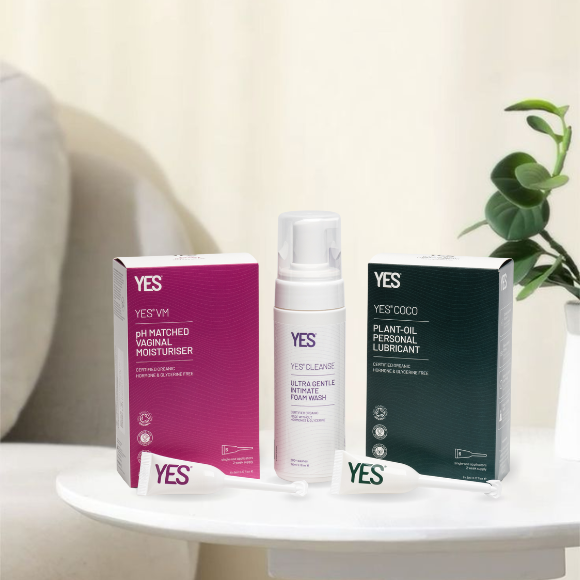
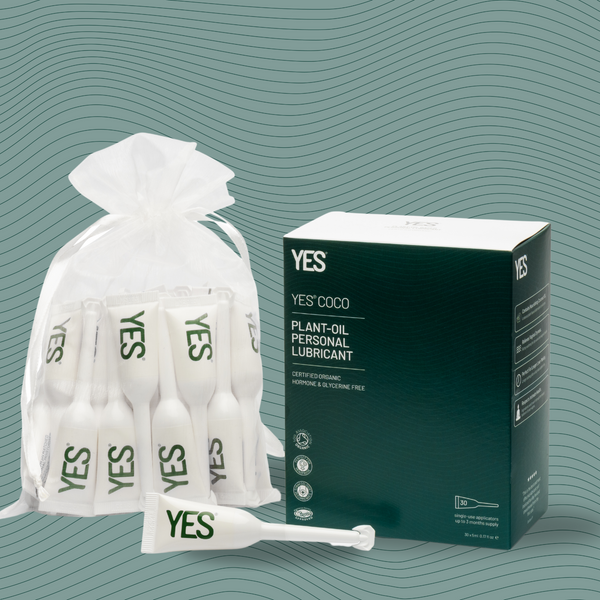
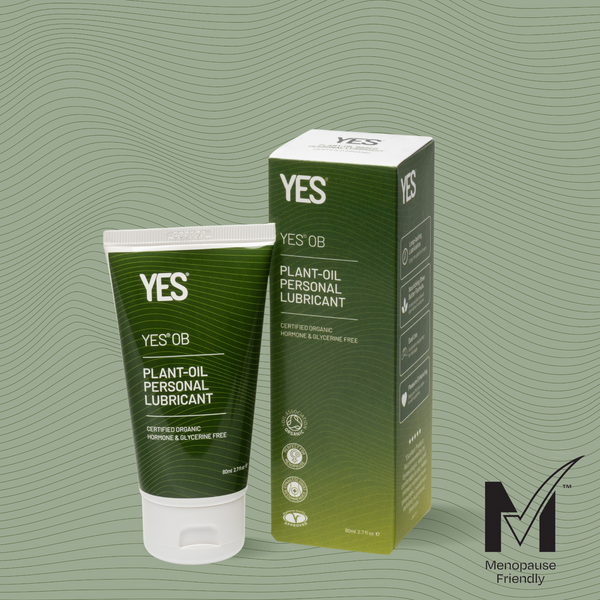
At Yes® we expect that you want to take the
best possible care of your sensitive vaginal tissues.
Yes® water-based uniquely contains natural
polymers that moisturize the dry tissues powerfully
and gently.
Yes® water-based is
the only certified organic, natural and hormone-free
vaginal moisturiser, in the world.
This means that Yes® water-based represents
the purest possible solution for all women who want
to treat their bodies with respect.
How does Yes® water-based
protect vaginal tissues?
The pH of Yes® water-based matches and supports
the optimal vaginal pH; this ensures that the newly
re-moisturized tissues are in their right environment. The
physiological pH of the vagina creates an ideal environment
that protects against infections such as Bacterial
Vaginosis and Thrush outbreaks.
How is Yes® water-based
different from other Vaginal Moisturizers?
There are so many ways that Yes® is different
we call it an
INTIMATE REVOLUTION.
Here are some of them:
 |
Yes® water-based is dual action: a powerful
moisturizer and an outstanding lubricant. |
 |
Yes® water-based is the only certified
organic water-based intimate product in the world,
(there are a few who have some organic ingredients,
but this is very different to being certified
organic), which means it is certified free
from parabens, petrochemicals, processing aids
and contaminants, synthetic thickeners, untested ‘natural’ ingredients,
pesticides, genetically modified ingredients
and known skin irritants. |
 |
Yes® water-based is free from glycerin,
which is thought to encourage the growth of Candida
albicans. |
 |
Yes® water-based feels reassuringly like
the real thing. Free of smell and taste,
it is very discrete and leaves the skin free
of the unpleasant residues experienced from using
old style moisturizers and lubricants. |
Read more about Yes® water-based here
|