
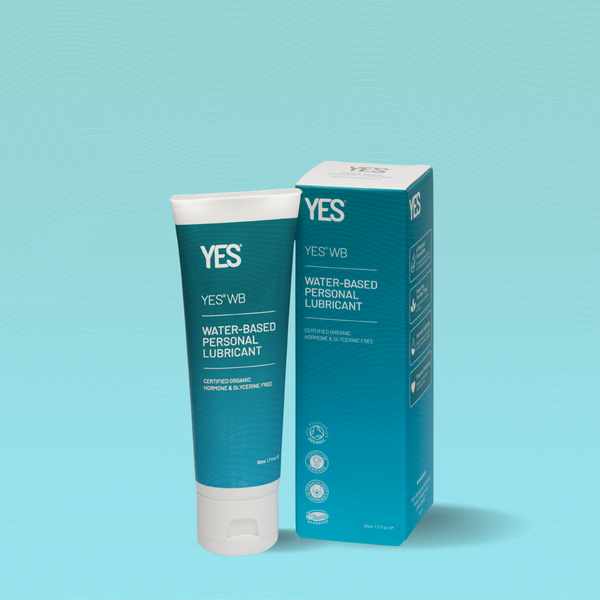
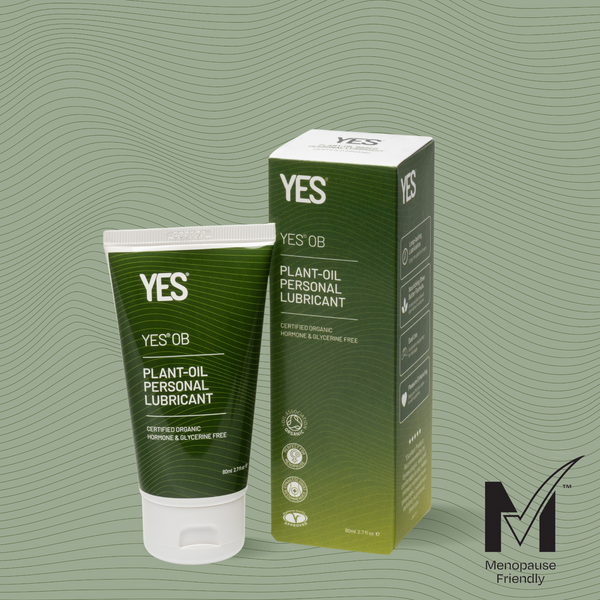
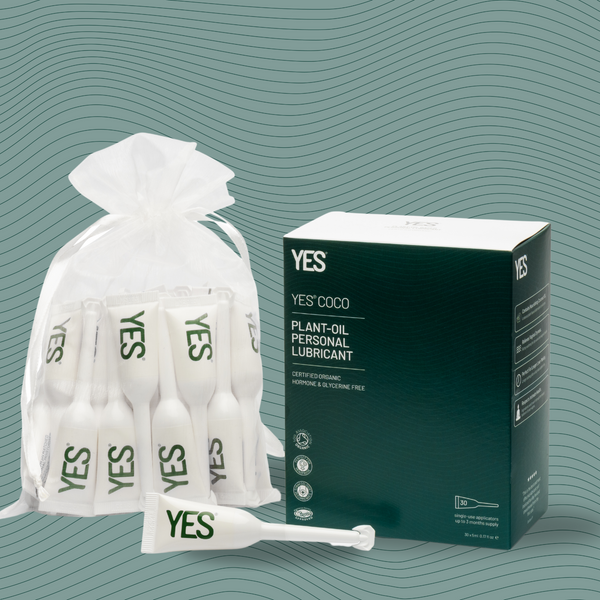
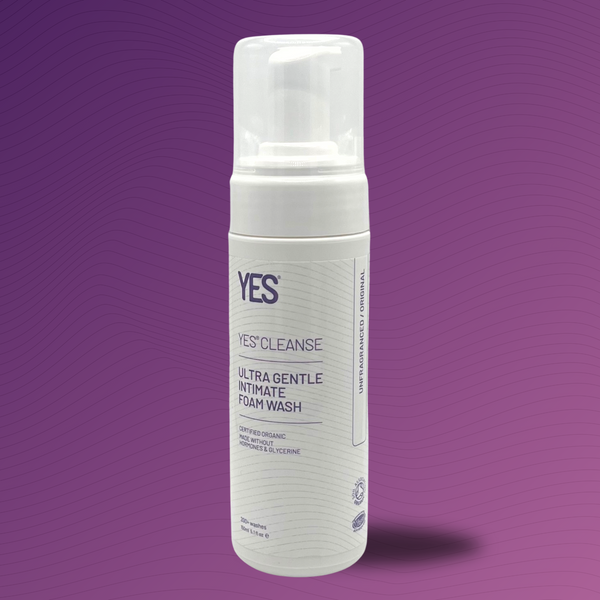

WB Water-Based Lubricant Tube

Select Tube Size:
Free YES WB 50ml when you spend £40+


Have a discount code? Add it in the next step.
4.8/5 based on 1,630 reviews
For many years, grapefruit seed extract (GSE) has been marketed as a natural ingredient with powerful antimicrobial properties.
You may have seen it promoted in products claiming to support intimate health, skin health, or protection against bacteria and yeast.
At first glance, it sounds like an ideal ingredient. It’s derived from grapefruit, widely described as “natural,” and often marketed as a gentler alternative to synthetic preservatives.
But when we looked closely at the science, we reached a different conclusion.
At YES, every ingredient we use must meet the same standard: it must be effective, gentle on intimate tissues, and supported by robust evidence. That’s why you’ll never find grapefruit seed extract in our products.
The popularity of grapefruit seed extract comes largely from claims that it can help prevent the growth of bacteria, fungi, and other microorganisms.
These antimicrobial claims led many manufacturers to use it as a “natural preservative” in intimate care products.
As a company founded by a female chemist and built on scientific integrity, we were naturally interested in whether grapefruit seed extract could help us create a truly natural preservation system for our products.
When developing YES products, we explored a wide range of preservation systems.
We initially considered grapefruit seed extract because it appeared to meet several important criteria:
However, when tested at concentrations considered safe for intimate tissues, grapefruit seed extract simply didn’t provide the preservation performance we required.
Our products repeatedly failed to meet the rigorous preservation standards required for healthcare and personal care products.
That alone was enough for us to reject it.
But our research uncovered something even more concerning.
Multiple independent studies have investigated commercially available grapefruit seed extract products.
Their findings were remarkably consistent.
Researchers found that the antimicrobial activity often attributed to grapefruit seed extract was not coming from the grapefruit itself.
Instead, many products contained undeclared synthetic antimicrobial chemicals, including:
In several studies, researchers found that when these synthetic additives were absent, grapefruit seed extract showed little or no antimicrobial activity.
One study published in the Journal of Agricultural and Food Chemistry identified benzalkonium chloride — a synthetic disinfectant commonly used in cleaning products — in commercial grapefruit seed extract products. The researchers concluded that its presence in products intended for use on the body was concerning given its known irritant and allergenic potential.
Another study published in Pharmazie found that antimicrobial activity was only present in grapefruit seed extract products containing synthetic preservatives. When researchers tested extracts made directly from grapefruit seeds, no antimicrobial activity was detected.
The vulval and vaginal tissues are naturally sensitive, which is why ingredient choice matters.
That’s why we believe ingredient transparency matters.
When choosing intimate care products, it’s important to know exactly what you’re putting on your body and whether ingredient claims are supported by evidence.
At YES, we take a precautionary approach:
✔ We use ingredients because they are proven to work.
✔ We avoid ingredients that raise questions about safety or transparency.
✔ We formulate products to support vaginal health, not simply follow trends.
Our products are designed to be:
One of the biggest misconceptions in women’s intimate health is that “natural” automatically means safe or effective.
The reality is more nuanced.
At YES, we believe women deserve products that combine the best of both worlds:
Carefully selected natural ingredients where they offer genuine benefits, backed by scientific evidence and rigorous testing.
That’s why every formulation is built around what works for women’s bodies — not marketing claims.
As we like to say, we’re not organic because it’s fashionable. We’re organic because we believe it’s better for intimate tissues.
Women often come to YES when they’re looking for relief from dryness, irritation, discomfort, or changes associated with menopause. Many have already tried products that didn’t work or didn’t feel right.
That’s why we hold ourselves to exceptionally high standards.
Every ingredient in a YES product is there for a reason.
Every claim is supported by evidence.
And every formula is designed with one goal in mind:
Helping women feel comfortable, confident, and like themselves again.
Takeoka GR et al. (2005). Identification of Benzalkonium Chloride in Commercial Grapefruit Seed Extracts. Journal of Agricultural and Food Chemistry, 53(19), 7630–7636.
von Woedtke T et al. (1999). Aspects of the antimicrobial efficacy of grapefruit seed extract and its relation to preservative substances contained. Pharmazie, 54(6), 452–456.
Sakamoto S et al. (1996). Analysis of components in natural food additive “grapefruit seed extract” by HPLC and LC/MS. Eisei Shikenjo Hokoku, 114, 38–42.
(From US department of agriculture website: http://www.ars.usda.gov/research/publications/publications.htm?SEQ_NO_115=182572)
Read more about the changes your body goes through during peri menopause and post menopause.
 All Blogs
 All Blogs
 All Blogs


