

WB Water-Based Lubricant Tube

Select Tube Size:
FREE UK Shipping on orders over £40


Have a discount code? Add it in the next step.
4.8/5 based on 1,630 reviews
“It burns.” “I feel drier afterwards.” “It's like it makes the problem worse.” If a lubricant has ever left you more uncomfortable than before, there is a real, measurable reason, and it has a slightly unglamorous name: osmolality. It's one of the most important things almost no product talks about, and once you understand it, a lot of bad experiences suddenly make sense.
Osmolality is a measure of how concentrated a fluid is — how many dissolved particles (sugars, salts, glycols) it contains compared with your body's own fluids. Water naturally moves across cell membranes from the less concentrated side towards the more concentrated side, trying to balance things out. So when a highly concentrated (hyperosmolar) product meets the delicate, water-rich tissue of the vagina, it can pull water out of the surface cells by osmosis.
The consequence is exactly what people describe: stinging, and tissue that feels drier once the product wears off. At high enough concentrations, laboratory and clinical research links hyperosmolar lubricants to disruption and shedding of the surface (epithelial) layer, which can leave tissue irritated and — because that surface is part of your defence — more vulnerable to infection, including BV and, in some research, increased susceptibility to STIs.
THE NUMBERS
Healthy vaginal secretions sit around 260–370 mOsm/kg. WHO advisory guidance considers an osmolality of 380 mOsm/kg or lower desirable, with 1,200 mOsm/kg an interim upper limit. Yet many popular lubricants test between roughly 2,000 and 6,000 mOsm/kg — several times higher than your own tissue.
High osmolality doesn't come from nowhere. It's typically driven by humectants like glycerin and solvents like propylene glycol — the same ingredients that can also irritate sensitive tissue. WHO guidance even links the osmolality limit to keeping total glycol content low. So a short ingredient list without these tends to track with a gentler, lower-osmolality product.
The shopping rule of thumb
For everyday water-based use, look for “iso-osmotic” (or close to your body's own range) and “pH-matched”
Be wary of glycerin and propylene glycol high up the ingredient list
If a brand won't tell you the osmolality, treat that as informative in itself
Remember a more acidic-than-ideal pH can also cause tingling — balance, not extremes, is the goal
pH matters alongside osmolality. After menopause the vaginal environment often becomes slightly alkaline (a higher pH), so when you first use even a well-formulated, correctly pH-matched product — one sitting around pH 4.5 — you may notice a brief tingle as it gently restores a more acidic balance. That initial sensation usually settles with continued use, and it's quite different from the persistent sting of a hyperosmolar or harsh product. The rule of thumb: a one-off tingle that fades is likely your tissue adjusting; stinging every single time points to the formulation, not the adjustment.
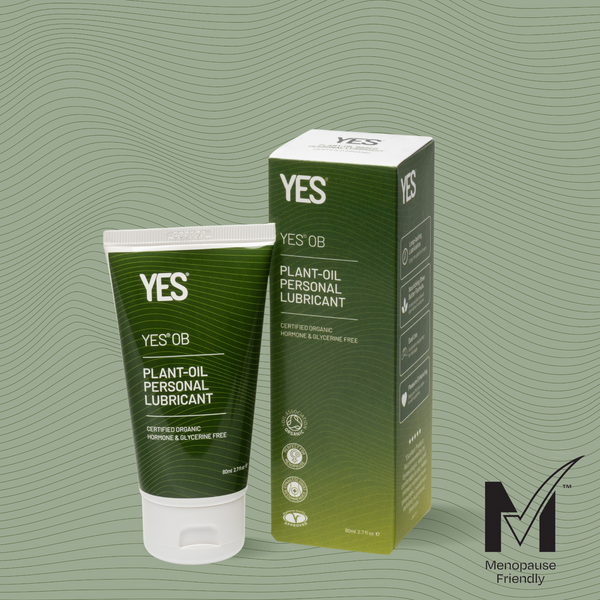
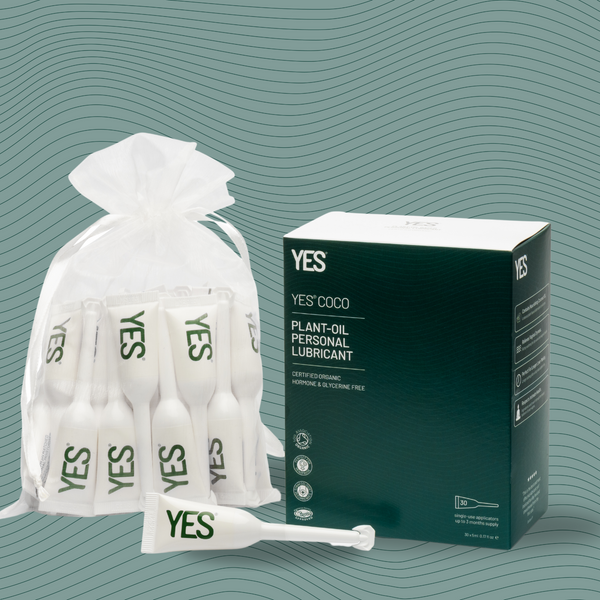
Osmolality and pH are mainly relevant to water-based products, because they're the ones that contain water. Oil-based options like our COCO and OB work differently — they cushion and nourish the surface rather than osmotically interacting with it — which is part of why some people find them more comfortable for longer sessions. The trade-off is that oils aren't latex-condom safe.
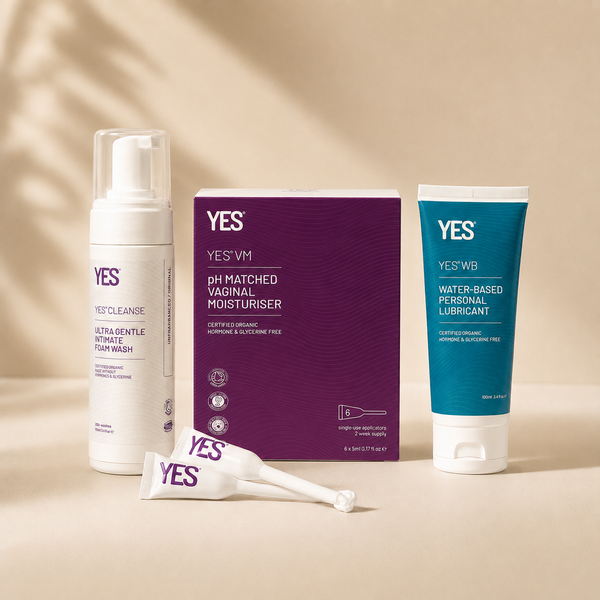
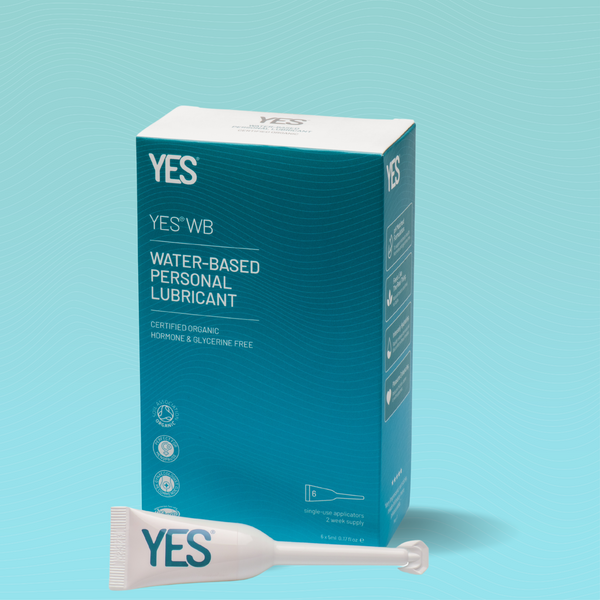
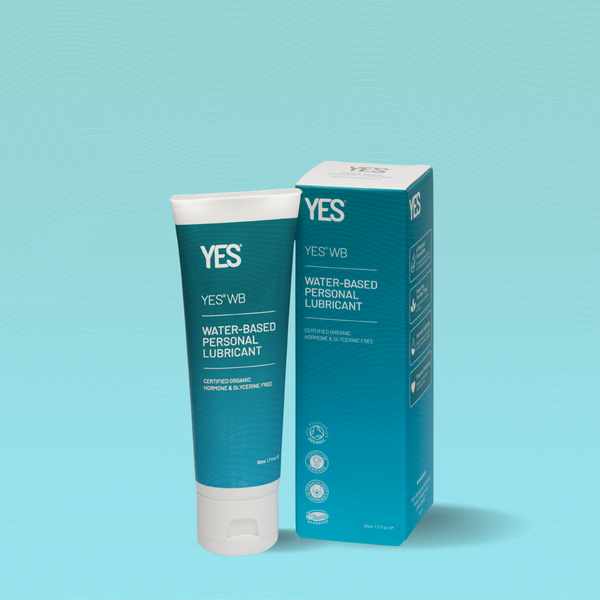
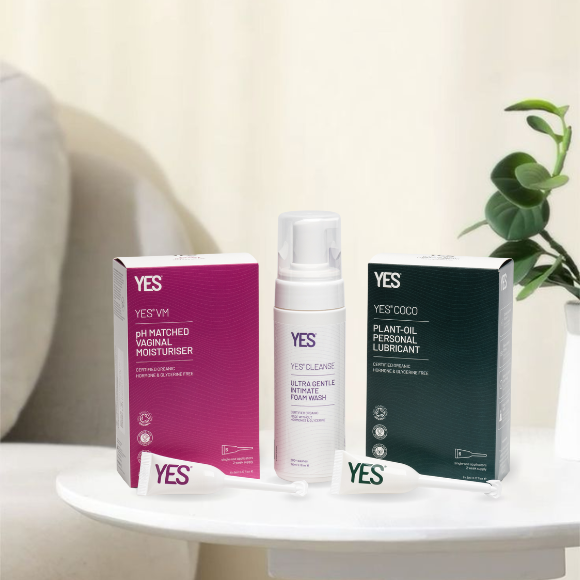
Our Water-Based Lubricant and Vaginal Moisturiser are formulated to be iso-osmotic and pH-matched — built to work with your body rather than against it. That isn't a tagline; it's the brief we started the formulation from, because relief should never come at the cost of your tissue.
If your current lube stings, it genuinely isn't “just you.” A body-matched, iso-osmotic formula can make a noticeable difference.
Read more about the changes your body goes through during peri menopause and post menopause.
 All Blogs
 All Blogs
 All Blogs


