
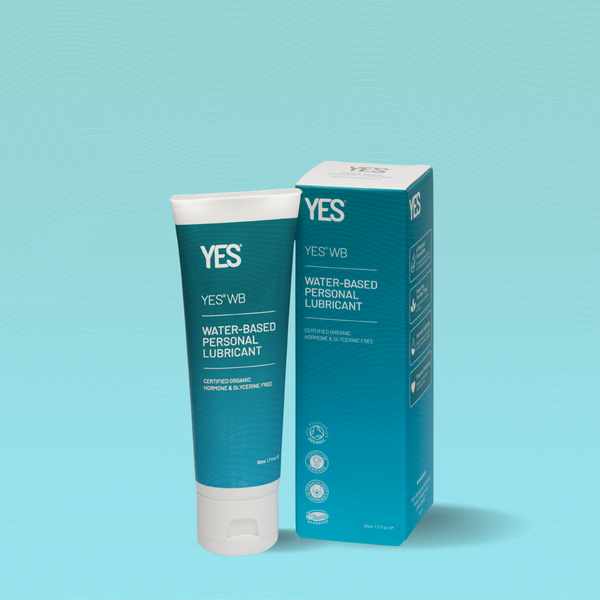
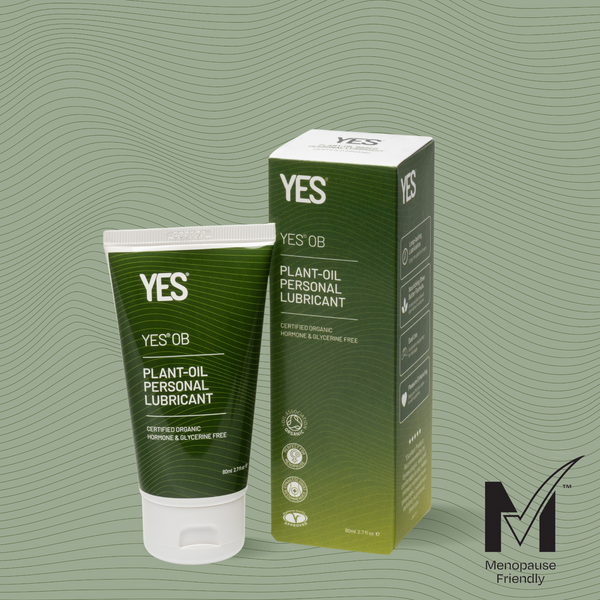

WB Water-Based Lubricant Tube

Select Tube Size:
FREE UK Shipping on orders over £40


Have a discount code? Add it in the next step.
4.8/5 based on 1,630 reviews
When most people think of aloe vera, they picture sunburns, after‑sun gels and slightly gloopy green bottles. But this plant has a talent for soothing, hydrating and protecting delicate skin, making it surprisingly well suited to intimate products. If you’re living with dryness and soreness, or you just want lube that doesn’t smell like sweets or feel like plastic, aloe‑containing formulas can offer a calmer, more skin‑like kind of comfort.
You’ve undoubtedly heard of aleo’s many benefits but how does that translate as a lubricant? Is it safe?
Let’s look at how aloe behaves in water‑based lubricants, where it can be especially helpful, and what to look for on the label before trusting it with your most reactive skin.
Yes! When it’s part of a properly formulated, body‑safe, water‑based lubricant.
Aloe vera gel is mostly water, with polysaccharides, vitamins and enzymes that help skin hold onto moisture and calm irritation, and can improve hydration and support healing of dry, irritated tissue.
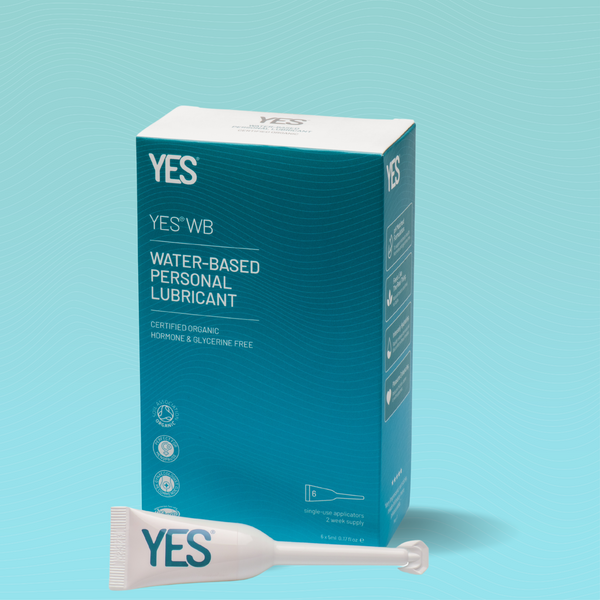
When blended into a pH‑appropriate, iso‑osmotic, glycerine‑free base (like YES water‑based lubes), aloe supports hydration without pulling moisture out of fragile vaginal tissue.
What’s not recommended is squeezing raw plant gel straight from a leaf and using it as DIY lube: it’s not pH-controlled, can contain irritants, and isn’t tested for internal use.
Remember to check the label! Look for pH‑matched, glycerine‑free, paraben‑free and certified organic formulations that are doctor‑recommended (NHS used, CE & UKCA certified medical devices) and M‑Tick approved for menopause‑related vaginal dryness.
The skin of the vulva is thinner, more absorbent and more reactive than the skin on your arm, and the vagina maintains a finely tuned pH and microbiome that is easy to disrupt.
When used in a properly formulated lubricant, aloe vera offers several distinct benefits for vulvar and vaginal comfort.
- Aloe’s high water content offers light, “natural-feel” moisture that mimics the body’s own lubrication rather than coating everything in a heavy film.
- Helps soothe redness and irritation from shaving, waxing, friction and penetrative sex, reducing sting or burn on intimate skin
- Naturally acidic and free from added sugars, it works with a pH‑matched, iso‑osmotic base to support the vagina’s own microbiome and help reduce the risk of yeast infections or BV, including in GSM or recurrent‑infection prone tissue.
- Slippery but not gluey, with no plasticky after‑feel that closely resembles the body's natural fluids.
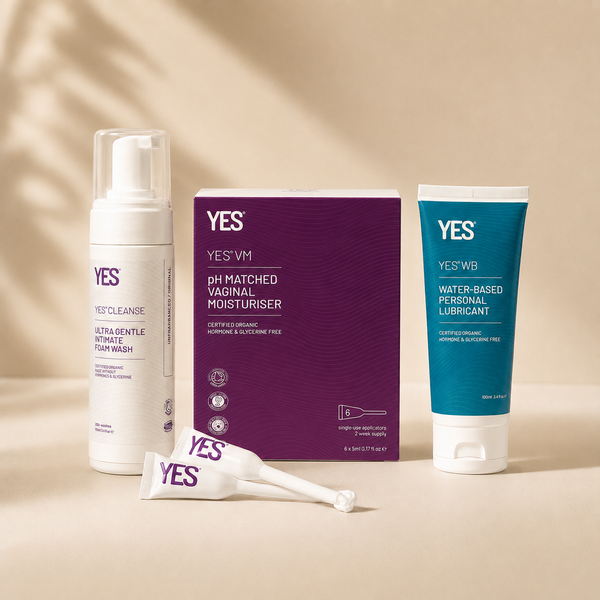
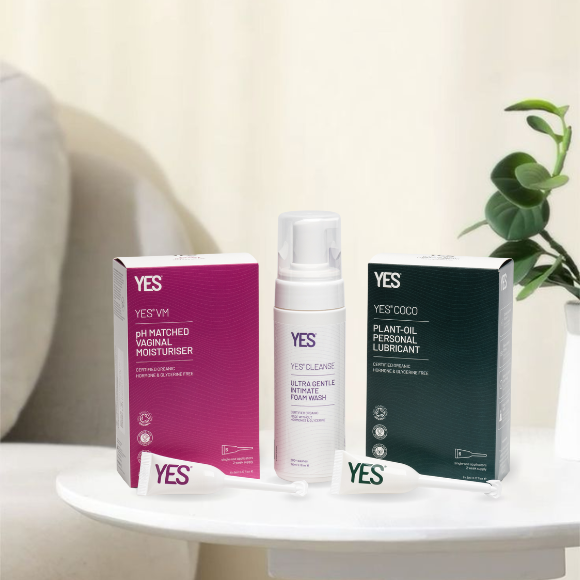
We also use aloe vera in YES VM vaginal moisturiser, where it helps rehydrate dry, fragile tissue, calm irritation and support up to 3 days of comfortable, non‑sticky moisture between uses.
Intimate care isn’t a “nice to have” extra, it’s part of basic body care. Paying attention to what you put on your vulva and into your vagina should be prioritisted how many do with their facial products. Choosing the right products is key to feeling comfortable in your own body again – in jeans, in meetings, in bed, and everywhere in between.
Read more about the changes your body goes through during peri menopause and post menopause.
 All Blogs
 All Blogs
 All Blogs


